The other world in this one

Sean Fitzpatrick • March 5, 2021
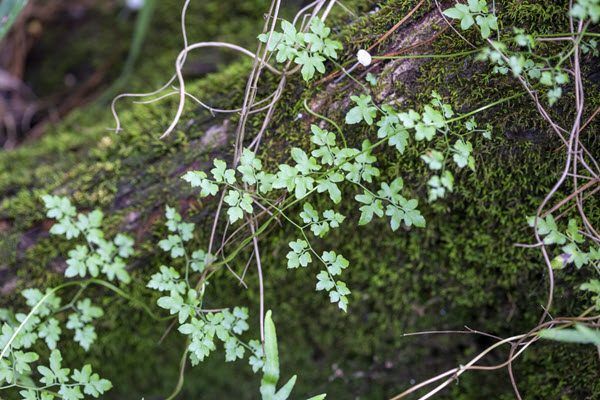
A close up of a plant growing on a mossy log.

The other world in this one
 

Friends,

My neighbor’s daughter is singing over the fence as I write this on my back porch, an unguarded stream of consciousness that is strong, confident, happy, part of the gentle cacophony of locusts and doves, dogs and car tires on asphalt that my preoccupied ears wouldn’t have registered before the pandemic. “There is another world, and it is in this one,” wrote the poet Paul Eluard.

One recent Friday night I was the guest speaker at the Texas chapter of the Caribbean Chamber of Commerce, held online in our new videoconferenced world. I’ve spent a lot of time in Zoom and Microsoft Teams these last two months, those flat checkerboards of pixelated faces, and I imagine you have too. I get brief glimpses of intimate spaces I never would have seen otherwise. For two hours we talked about fear, shame, and grief during the pandemic, and what we can do to keep grounded and sane. One of the faces on that call was staring out at the rainy road ahead of her as she drove home from work. Her face shook as the wheels bumped along. She told us that her mother died of COVID and that she hadn’t stopped moving since, afraid to feel anything. She has hypertension, and when she last checked, her blood pressure was in a dangerous place. The car hit a hole and the phone shook loose of its bracket, sending her face spinning out of the frame. She reappeared later, safe at home.

Her face happened to be black. This weekend, we are grappling with the senseless death of yet another unarmed black man in this country. For some thoughts about what white people can do in this moment, we’ve posted a brief video, which you can access by clicking here.

We live in a liminal space now. Anthropologists used that term to refer to the period between two identities, when children leave the safety of the hearth to be initiated into adult life by the elders of the community. The liminal period is in-between, when we are not what we were and are not yet what we will become. It is a kind of death, and a waiting for rebirth. It also often involves wounding, scarring. Mass trauma events like the pandemic disrupt basic experiences of continuity in our lives – the continuity of a stable work identity, of a paycheck, of regular contact with people we love, of meetings and coffee shops and basketball games and church services.

The other world in this one is pushing through, and if we pay attention, we can be part of its emergence. The extraordinary people of Harris County Public Health and the City of Houston’s Health Department are close to it now. Since mid-March, I have been privileged to sit with many of them, breathing the same air in conference rooms and entering their homes and offices through webcams. We’ve talked about self-care and the superhuman pressures they are under right now to keep us safe. Public health departments have been systematically defunded over the last thirty years. Now, we desperately need them to stay in their roles, to do the methodical work of tracking the path of COVID through our community. There are far too few of them and none have experience with something like this, young professionals committed to serve the common good who did not know what sacrifices would be asked of them when they took these jobs, or how heavy the burden would be.

In one of those rooms, early on, one of those committed few confessed that what she was most grateful for that week were the “illegal hugs” she got from her colleagues at moments of crisis. It’s an image of heartbreaking dissonance, the basic human comfort that has been rightly outlawed, taken from us when it could do so much to help our fear and grief and loneliness. The other world is upending the most basic assumptions of this one, or that old one, which is already passing away.

But, as my colleague Michael Craig wrote early in this experience, our hearts and minds can share spaces our bodies cannot. And our bodies are now beginning to share spaces again, haltingly, with great uncertainty, sometimes in brazen rebellion, always relating to the bold face of suffering, our fear of it, and our measures to ease its power. The future holds many decisions we feel unequipped to make, risks that we have to calculate on the fly, grievous economic dislocations and inequities, and fractures in relationships that we never expected.

It also holds great promise. We cannot ignore the suffering — physical, economic, spiritual — that comes with this moment. If we deny that, or make it serve some greater meaning or purpose, we lose the promise. The other world is pushing through, destroying much that was beautiful and irreplaceable, and much that was broken and desolate. For me, the promise is in the voice of my neighbor’s daughter, singing. It is in the faces gathered in grids on screens to reflect candidly, passionately, with clarity and vulnerability about real things. Our lives have always been under threat. Now we can see it, and seeing it frees us to speak openly about what matters most in our lives.

The Jung Center has been privileged to serve its mission online since mid-March. Our faculty and staff cancelled a significant part of our spring programming and rebuilt it from scratch, with most of what we’ve done offered free of charge and without faculty honorarium. If you know a Jung Center instructor, thank them — they have been so generous with their gifts. We will continue to plan programming on a rolling basis, with many summer offerings already on our website and many more to come.

Our building will not reopen to the public in a consistent way this summer, though we will be opening the bookstore for curbside service on Tuesdays and Thursdays (Elissa Davis would LOVE to hear from you, at edavis@junghouston.org). We will not be mailing our program guide for summer, to reduce costs at a time when all of our resources are stretched thin.

We continue to serve the mental health needs of the broader community through ongoing work on self-care and burnout with the staffs of regional public health departments and local nonprofit organizations working on the pandemic and the great social crises that have accompanied it. Alejandro Chaoul and our Mind Body Spirit Institute continues to work closely with hospital staffs on their self-care through this crisis.

This would normally be the time of year when we encourage you to consider becoming a member, or renewing your membership. We won’t be mailing letters this year, to save expense. If you aren’t a member, consider joining this community and supporting our work. Now more than ever, we need each other, and a commitment to action rooted in reflection and connection, to seeing the other world in this one.

Warmly,

Sean

Share

Recent Posts

Abstract watercolor art; blues, greens, and browns blend, with a central, light-colored figure and radiant halo-like shape above.
By Karleen Koen February 2, 2026
When I had passed midlife but didn’t quite think of myself yet as old, I came across a quote from Carl Jung: “No, thoroughly unprepared we take the step into the afternoon of life; worse still, we take this step with the false assumption that our truths and ideals will serve us as hitherto. But we cannot live the afternoon of life according to the programme of life’s morning; for what was great in the morning will be little at evening, and what in the morning was true will at evening become a lie.”* The words hit me in some truth center of my being. They clarified feelings of unease, displacement, restlessness, uncertainty—quiet and deep—that had been building in me since midlife. They gave me the beginning of a way to age differently from what I had seen modeled in my family and the culture around me. Family— despair and bitterness. Culture—Botox and pills. And then I stumbled onto the beginning of the Community for Conscious Aging at The Jung Center. It became a home with fellow sojourners in this journey that we all face: growing old and dying. How does one do that in a way that is vital and purposeful, willing and willful—creative, and real, and in community? How does one live from midlife onward when the way ahead is unclear and goals of the past may no longer work as well as once they did? There is no ritual or meaning out there to help me move into this. Carl Jung writes in his essay “Stages of Life” that there is no university for midlife onward, but I feel like the Community for Conscious Aging gives me what I need. I find knowledge and advice. I find people who are on the same journey as I am, or even ahead of me. I find community. I’ve attended free programs, as well as book studies and workshops. Every month, I can hear a speaker over Zoom talk about some aspect of aging, from the practical to the esoteric. The talks are called Lunch & Learns, and they are free. I’ve learned about everything from how to age in place, to what records and documents I need done before I die, to the fact that “my kids don’t want my stuff” and the practice of Swedish death cleaning. This spring, my Lunch & Learn choices are: “Understanding Death in a New Way,” “Ethical Wills,” and “Stories We Inherit.” This spring, I can attend workshops like “Letter to My Children on Inheritance,” “Positive Aging: The Spirituality of Later Life,” or “What Matters Most: How Can We Accept Mortality?” I can meet in circles to talk deeply about anything and everything. I can go to a Jung Center Gallery Artist Talk to learn that creativity is ageless. And being part of The Jung Center means programs exist in its other divisions— The Mind Body Spirit Institute, Creating Your Life, The McMillan Institute for Jungian Studies—that cross over to enrich and feed my life. I’m now 77. I am climbing the high mountain whose summit I cannot see but know is there. Two of my sherpas and guides are the Community for Conscious Aging and what it offers, followed by The Jung Center itself with all its riches. *“The Stages of Life”, The Structure and Dynamics of the Psyche (Collected Works of C.G. Jung, Vol. 8)
Colorful abstract painting of trees in a landscape. Reds, blues, and yellows dominate.
By Lois F. Stark January 5, 2026
When I was twelve years old, my father took me by one hand. In his other hand, he held a telescope. He led me to our backyard, where he had set up a tripod. As he positioned my eye to the scope, he asked, “Can you imagine what life on other planets might be like?” He was teaching me to wonder as much as he was teaching me astronomy. Telescopes allow us to see the unseen in stars and planets. Imagination is also a telescope for the unseen. My father pointed out the shape of the Little Dipper with its handle ending in the North Star. Once you know north, you can navigate the globe. Thinking back to that moment, he was showing me how to zoom out to infinity, how to zoom out to the possibilities imagination brings, and how to zoom in to the clue that is always available—how to find north. You can be lost in the wonder of infinity and still find your place on Earth. I followed his prompts to zoom out, to practice seeing things from above. When I was in high school, Sputnik went up. This Russian satellite was the first to enter space. It kicked off a space age, a scientific race, and a new worldview—seeing Earth from above. At that moment, I knew immediately what I wanted to be. It was not an astronaut. I wanted to be a “space lawyer”. I wanted to invent the terms that would bring agreement to the biosphere, as admiralty law did for the oceans. I imagined space law as the next iteration of the United Nations. I did not become a space lawyer, but I still practiced zooming out. I joined NBC Network News in Washington, D.C., and made documentaries in Liberia, Abu Dhabi, Israel, Northern Ireland, Cuba, and other countries in tension and transition. Filming foreign cultures was another way to see the unseen, to experience the wild variety of ways to live in this world. Just as the Big and Little Dipper use shape to key us to the stars, I started to think of shape as a way to understand human history. I remembered that when I filmed in tribal cultures, their shelters, social systems, and sacred sites were all circular, from round thatched huts to Stonehenge. When I filmed in cities, it seemed a ladder dominated their worldview, from pyramids to skyscrapers. Today, the network model masters our global lives, from technology to the map of our brain. These thoughts led to my book, The Telling Image: Shapes of Changing Times . Throughout my life in Houston, I came to The Jung Center as the place to understand the shapes and patterns in human history and in my own life story. I took courses in mythology and fairy tales, studied my night dreams and daydreams, researched symbols and wrote poetry, and took courses in the history of human ideas. The Jung Center is a place of learning, though not a school. It is a center that addresses spirit and mystery, though not a house of worship. It is a place of creative arts, though not a museum. The Jung Center offers us ways to see the unseen, to zoom out to the universe, and to zoom into ourselves.
Yellow tires with
By Sean Fitzpatrick January 5, 2026
Friends, Circles represent symbolic wholeness. At moments of great crisis and disequilibrium, Jung understood that circles may appear in our dreams, as ways of reflecting the greater order that underlies our experiences of chaos. In early November, a group of wary Houstonians gathered for a tough conversation around a set of round tables in a large hall at Interfaith Ministries of Greater Houston. They came from across the political spectrum to discuss complex issues with people who disagreed with them. Depending on the table, participants discussed either freedom of speech or immigration, in a set of structured dialogues led -- but not controlled -- by moderators at each table. The founders of this dialogue were unlikely allies: Republican City Councilmember Julian Ramirez and his chief of staff, Democrat Leah Wolfthal, who met while they were both running for the same council seat. Councilmember Sallie Alcorn has joined them as a host. A third is planned for January 14. I’ll be there. The movement is growing. The round tables of the Bringing Houston Together initiative do not promise cheap or easy wholeness. They tell us that the work of coming together across deep rifts is risky and uncomfortable. And the bulk of the work is internal, as we open ourselves to honestly host the reality of those whose differences from us seem -- or may even be -- threatening to our most fundamentally-held values. Listening closely, not persuading or being persuaded, is the work our community has forgotten. It may be the hardest, most necessary work we have right now. Personal wholeness does not come cheap or easy, either. It's a life's work – or, rather, the way of a life lived with integrity. It involves walking toward what we fear, toward what disgusts us, toward those things we are sure that we are not -- except for that aching suspicion that, deep down, we are those things. It involves rejecting fantasies of purity to accept what is real. How do we accept what seems unacceptable about us? How do we live with it -- and not just live with it, but find what we've been missing, perhaps what we most need? You may have noticed that circles have become a bigger part of our public offerings. These are not classes, but opportunities to sit across from each other and practice listening deeply to the mystery revealed through each of us. When our staff collects for in-person meetings, we gather in a circle. Our circle is growing. This fall, we hosted 20% more students in our public programs than we did last fall. That growth has come from the skill of our instructors, from the tightening of the weave among our committed, deeply caring staff. And from you, and your willingness to be transformed by holding our great, difficult questions together in community. Thank you for being a part of this circle. Please consider helping us expand the circle in 2026 with a meaningful gift to our annual fund. You can do that right now, by clicking here. And if you have already given, we are grateful. Warmly, Sean Fitzpatrick Executive Director
Show More