Haiti, Humility, and Our Shared Humanity
Sean Fitzpatrick, • November 23, 2021
Wismick Jean-Charles
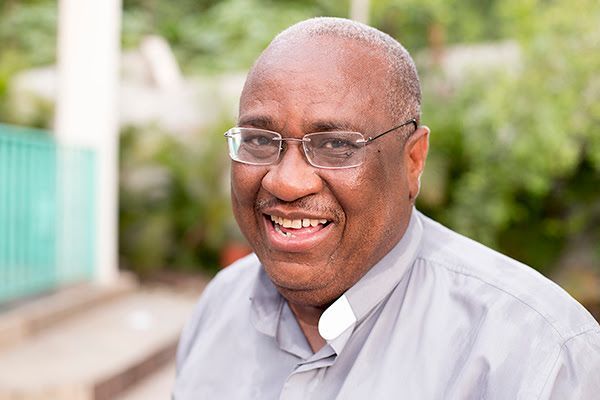
Fr. Wismick Jean-Charles, founder, CESSA

Haiti, Humility, and our Shared Humanity

August 15, 2021

Friends,

This weekend, I'd planned to finish work on a conference presentation scheduled for next Sunday morning. That changed yesterday, when news of the major earthquake in Haiti filled me with dread and panic. A dear friend, the psychologist Wismick Jean-Charles, was due to fly to Port-au-Prince this weekend to finalize preparations for that conference next weekend. It is the eleventh he has organized annually since 2011, one year after the last major Haitian earthquake in 2010. The panic eased when I heard from him early this morning; he was in an airport, beginning his trip. (That's him in the picture above, two years ago in Port-au-Prince, after the ninth conference.)

Wismick was in an eerily similar situation in January 2010, abroad at the time of the devastating tragedy at home. He flew into the Dominican Republic, drove across the Haitian border, and worked under horrific conditions to rescue Haitians and provide medical care. More than 220,000 Haitians died in the earthquake, the greatest natural disaster in the Western Hemisphere in recorded history.

This last decade of Wismick's life has been in great part a response to that experience. He has worked to build a culture of mental health in Haiti, by teaching basic mental health skills to schoolteachers, undergraduates, nurses, nuns and ministers, doctors, lawyers -- a community of volunteers who could respond in a moment and would remain long after media and foreign interest wanes. There are no graduate level clinical mental health training programs in Haiti; the mental health of Haitians depends on dedicated volunteers who gain skills during these annual conferences. Last year, the government of Haiti became an official sponsor, and four Haitian media outlets simulcast the conference on television and radio. They are scheduled to do so again next weekend.

Wismick picked humility as the conference theme this year. Before yesterday's earthquake, I felt inadequate to the task of saying anything about humility to anyone, let alone as an American speaking to Haitians. In his note early this morning, Wismick told me "my people go from tragedy to tragedy." I have nothing to teach them.

One of the core ideas of Jungian psychology is that much of who we are hides in plain sight, in what we call our shadow. What we need to become whole human beings lives within us, bound up with what we least want to admit about ourselves, what we have rejected or never adequately seen. The work of becoming psychologically mature involves identifying those stories that remain hidden, untold, within us, and those stories that others have kept hidden from us. Done with integrity, the process is not self-destructive, but liberating -- for ourselves, and for our communities.

The Pulitzer Prize- and National Book Award-winning essayist Ta-Nehisi Coates captured the essence of this work in a recent interview with Ezra Klein (which you can find here):

"...who amongst us gets to belong to a family where we feel everybody in that family has always been noble at all points in time? Who amongst us gets to honestly strip ourselves naked and look at our own biography and feel like we were always noble and we were always right? There’s a kind of humanness, a kind of grace I would even argue, that can be found if you can submit yourself to the notion that you’re not required to be perfect, you’re not required to be the good guy in the story. That in fact to try to do that is in many ways a rejection of your own humanity."

We are inextricably bound to Haiti, however distant it may seem in our newsfeeds and on our screens. Many Haitians express anguish every time they hear Haiti described as "the poorest country in the Western hemisphere." Haiti is the home of the only successful slave revolt in history, which made possible the end of slavery throughout the Americas and led directly to the massive expansion of the United States through the Louisiana Purchase. The America we know and the America we believe ourselves to be depends on the courage of Haitians. Who we do not want to be, and yet still are, depends on the suffering, exploitation, and death of Haitians over four centuries, through the slave trade to the United States, through waves of American economic and military invasions, through moral failures and blindness. Through America’s humanity.

As our gaze is drawn helplessly to Haiti in the coming days and weeks, I encourage you to notice and let go of that helplessness. Material support for Haitian relief efforts will of course be incredibly important, if you have the means to contribute. You might also explore the riveting and essential history of Haiti (a great starting place is Haiti: The Aftershocks of History , by Laurent Dubois). If you’re like me, you’ll find parts of America's soul hiding there. 

Humility shares a root with humus , the richly fertile layer of soil composed of decaying plant and animal matter, a matrix of life and death. Discovering what we do not know about ourselves and our shared history, reclaiming rather than rejecting our humanity -- exploring our shadows -- is an expression of humility. That is where life emerges. Like Ta-Nehisi Coates, I think we might find grace there. 

Warmly,


Sean Fitzpatrick

Executive Director

P.S. If you would like to learn more about Wismick’s series of annual conferences, you can click here to watch a brief video. The Jung Center has been a proud sponsor of these conferences for the last four years, with the Center for Spirituality and Mental Health of Port-au-Prince (CESSA) and the University of Notre Dame of Port-au-Prince. If you would like to contribute to CESSA's vital work, just reply and I'll send contact information. You may know our staff members Elissa Davis, Michael Craig, and Mary Oleyar; they volunteered to work next Sunday and Monday to manage the live video feed, for which I’m deeply grateful.

Share

Recent Posts

Colorful abstract painting of trees in a landscape. Reds, blues, and yellows dominate.
By Lois F. Stark January 5, 2026
When I was twelve years old, my father took me by one hand. In his other hand, he held a telescope. He led me to our backyard, where he had set up a tripod. As he positioned my eye to the scope, he asked, “Can you imagine what life on other planets might be like?” He was teaching me to wonder as much as he was teaching me astronomy. Telescopes allow us to see the unseen in stars and planets. Imagination is also a telescope for the unseen. My father pointed out the shape of the Little Dipper with its handle ending in the North Star. Once you know north, you can navigate the globe. Thinking back to that moment, he was showing me how to zoom out to infinity, how to zoom out to the possibilities imagination brings, and how to zoom in to the clue that is always available—how to find north. You can be lost in the wonder of infinity and still find your place on Earth. I followed his prompts to zoom out, to practice seeing things from above. When I was in high school, Sputnik went up. This Russian satellite was the first to enter space. It kicked off a space age, a scientific race, and a new worldview—seeing Earth from above. At that moment, I knew immediately what I wanted to be. It was not an astronaut. I wanted to be a “space lawyer”. I wanted to invent the terms that would bring agreement to the biosphere, as admiralty law did for the oceans. I imagined space law as the next iteration of the United Nations. I did not become a space lawyer, but I still practiced zooming out. I joined NBC Network News in Washington, D.C., and made documentaries in Liberia, Abu Dhabi, Israel, Northern Ireland, Cuba, and other countries in tension and transition. Filming foreign cultures was another way to see the unseen, to experience the wild variety of ways to live in this world. Just as the Big and Little Dipper use shape to key us to the stars, I started to think of shape as a way to understand human history. I remembered that when I filmed in tribal cultures, their shelters, social systems, and sacred sites were all circular, from round thatched huts to Stonehenge. When I filmed in cities, it seemed a ladder dominated their worldview, from pyramids to skyscrapers. Today, the network model masters our global lives, from technology to the map of our brain. These thoughts led to my book, The Telling Image: Shapes of Changing Times . Throughout my life in Houston, I came to The Jung Center as the place to understand the shapes and patterns in human history and in my own life story. I took courses in mythology and fairy tales, studied my night dreams and daydreams, researched symbols and wrote poetry, and took courses in the history of human ideas. The Jung Center is a place of learning, though not a school. It is a center that addresses spirit and mystery, though not a house of worship. It is a place of creative arts, though not a museum. The Jung Center offers us ways to see the unseen, to zoom out to the universe, and to zoom into ourselves.
Yellow tires with
By Sean Fitzpatrick January 5, 2026
Friends, Circles represent symbolic wholeness. At moments of great crisis and disequilibrium, Jung understood that circles may appear in our dreams, as ways of reflecting the greater order that underlies our experiences of chaos. In early November, a group of wary Houstonians gathered for a tough conversation around a set of round tables in a large hall at Interfaith Ministries of Greater Houston. They came from across the political spectrum to discuss complex issues with people who disagreed with them. Depending on the table, participants discussed either freedom of speech or immigration, in a set of structured dialogues led -- but not controlled -- by moderators at each table. The founders of this dialogue were unlikely allies: Republican City Councilmember Julian Ramirez and his chief of staff, Democrat Leah Wolfthal, who met while they were both running for the same council seat. Councilmember Sallie Alcorn has joined them as a host. A third is planned for January 14. I’ll be there. The movement is growing. The round tables of the Bringing Houston Together initiative do not promise cheap or easy wholeness. They tell us that the work of coming together across deep rifts is risky and uncomfortable. And the bulk of the work is internal, as we open ourselves to honestly host the reality of those whose differences from us seem -- or may even be -- threatening to our most fundamentally-held values. Listening closely, not persuading or being persuaded, is the work our community has forgotten. It may be the hardest, most necessary work we have right now. Personal wholeness does not come cheap or easy, either. It's a life's work – or, rather, the way of a life lived with integrity. It involves walking toward what we fear, toward what disgusts us, toward those things we are sure that we are not -- except for that aching suspicion that, deep down, we are those things. It involves rejecting fantasies of purity to accept what is real. How do we accept what seems unacceptable about us? How do we live with it -- and not just live with it, but find what we've been missing, perhaps what we most need? You may have noticed that circles have become a bigger part of our public offerings. These are not classes, but opportunities to sit across from each other and practice listening deeply to the mystery revealed through each of us. When our staff collects for in-person meetings, we gather in a circle. Our circle is growing. This fall, we hosted 20% more students in our public programs than we did last fall. That growth has come from the skill of our instructors, from the tightening of the weave among our committed, deeply caring staff. And from you, and your willingness to be transformed by holding our great, difficult questions together in community. Thank you for being a part of this circle. Please consider helping us expand the circle in 2026 with a meaningful gift to our annual fund. You can do that right now, by clicking here. And if you have already given, we are grateful. Warmly, Sean Fitzpatrick Executive Director
By Sean Fitzpatrick October 21, 2025
It is so hard to find stillness in our world
Show More